
Nichijou: My Ordinary Life may have premiered years ago, but its influence on modern anime comedy is undeniable. Created by Keiichi Arawi and animated by Kyoto Animation, Nichijou redefined what “slice-of-life comedy” could be by transforming mundane daily moments into explosive, surreal humor. As of today, its DNA can still be seen across many contemporary comedy anime.
Turning the Ordinary Into the Absurd
At its core, Nichijou is built on contrast. Simple situations—forgetting homework, a casual greeting, a minor misunderstanding—suddenly escalate into dramatic, over-animated spectacles. Instead of relying on traditional punchlines, the series uses exaggerated motion, cinematic framing, and unexpected intensity to create humor.
This approach reshaped audience expectations. Modern anime comedies increasingly embrace the idea that everyday life itself can be the setup for absurdity, without needing elaborate premises or fantasy worlds.
Visual Comedy Over Dialogue
One of Nichijou’s most important contributions is its emphasis on visual gags. Rather than explaining jokes through dialogue, the anime lets animation do the work. Rapid cuts, extreme facial expressions, slow-motion reactions, and sudden action sequences all serve as comedic devices.
Many post-Nichijou anime have adopted similar techniques, prioritizing expressive animation and timing over verbal humor alone. This shift has helped comedy anime become more accessible across cultures, as visual humor often transcends language barriers.
Embracing Chaos Without Cynicism
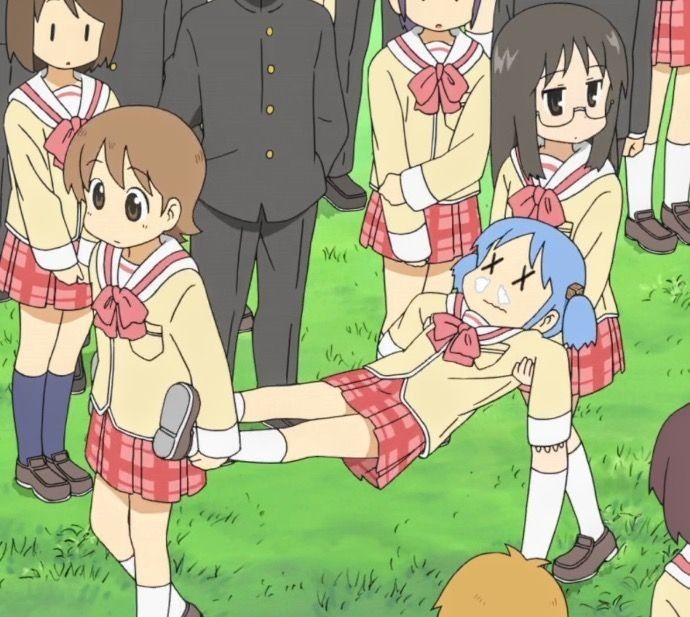
While Nichijou is chaotic, it is never cruel. Its humor does not rely on sarcasm, heavy satire, or mockery of its characters. Instead, it treats its cast with warmth, allowing viewers to laugh at situations without feeling detached from the people involved.
This balance has influenced newer comedy anime that aim to be energetic and absurd while remaining emotionally comforting. In a landscape where darker or more cynical humor is common, Nichijou stands out as proof that kindness and chaos can coexist.
Inspiring a New Generation of Creators
Animators and directors have frequently cited Nichijou as a benchmark for comedic timing and animation freedom. Its willingness to exaggerate reactions far beyond realism encouraged creators to push boundaries and experiment visually.
Modern series that mix slice-of-life with extreme humor often echo Nichijou’s philosophy: comedy is not just about jokes—it is about rhythm, movement, and surprise. Even anime outside the pure comedy genre borrow its expressive techniques for humorous moments.
Meme Culture and Digital Longevity
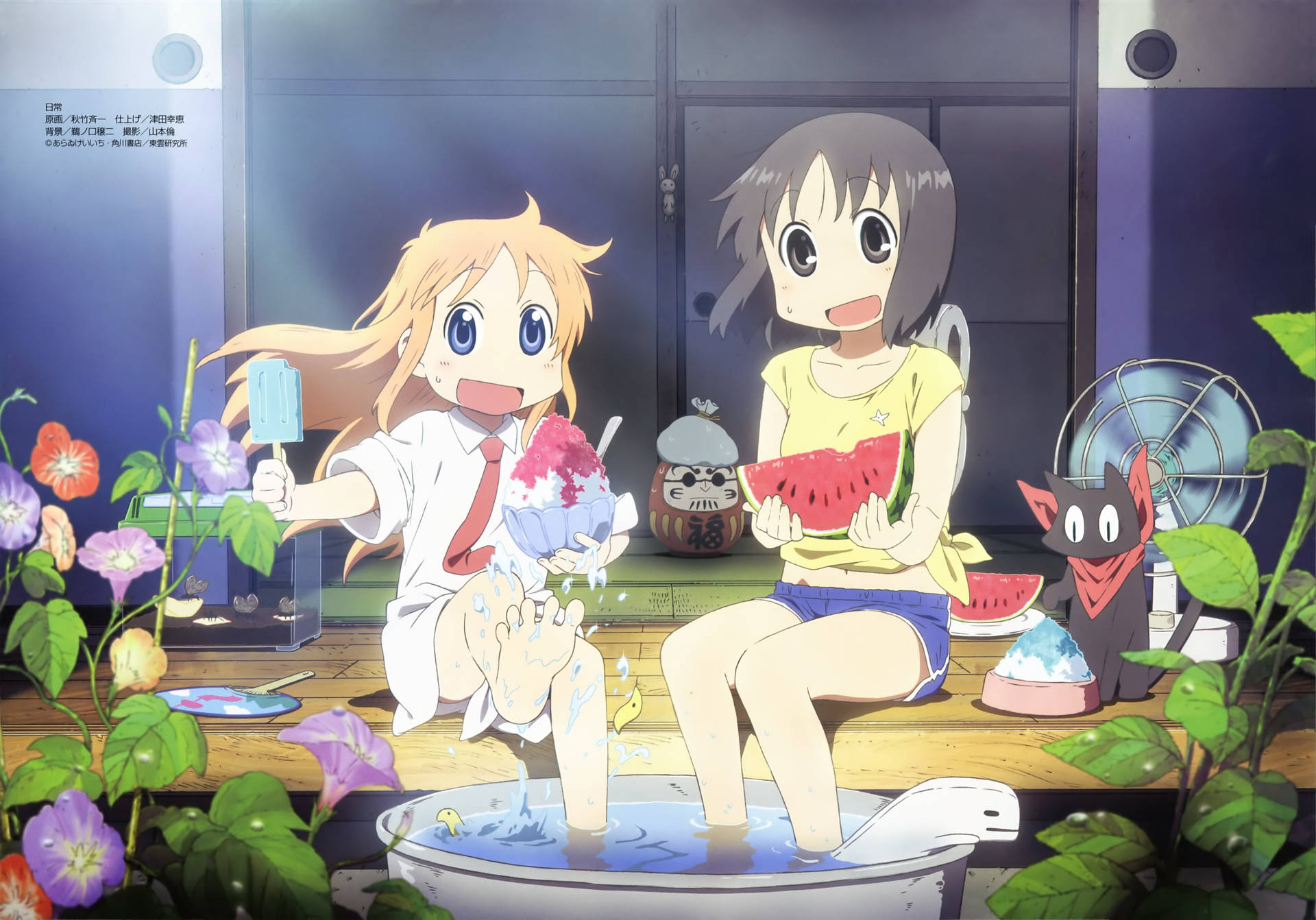
Another reason Nichijou continues to influence modern comedy is its presence in online culture. Short clips, reaction GIFs, and iconic scenes are constantly reshared on social platforms. These moments introduce the anime to new audiences who may not watch full episodes but instantly recognize its style.
This memetic longevity has shaped how studios think about comedy scenes—favoring moments that are visually striking and easily shareable without losing context.
Why Nichijou’s Influence Still Matters
In an era of increasingly complex narratives and high-stakes storytelling, Nichijou reminds audiences and creators alike that simplicity can be powerful. Its humor does not depend on plot progression or character arcs; it thrives on timing, exaggeration, and creativity.
Even years later, Nichijou remains a reference point for what anime comedy can achieve when animation is treated as the punchline itself.
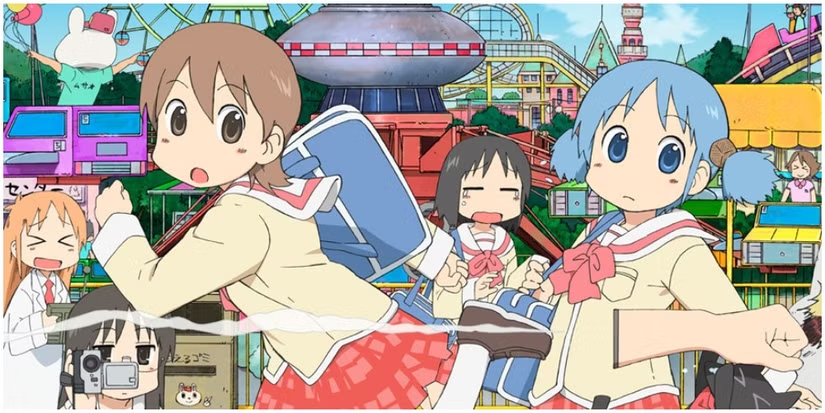
👉 If you’re a true Nichijou fan and want to celebrate the charm and chaos of this unforgettable comedy, explore officially inspired apparel, collectibles, and fan-favorite designs at Nichijou Store: nichijou.store. Discover items that let you carry the spirit of Nichijou beyond the screen and into your everyday life.
